Casino History
The Cowboy, the Fake Mustache, and the Lawsuit That Broke Atlantic City’s Rules
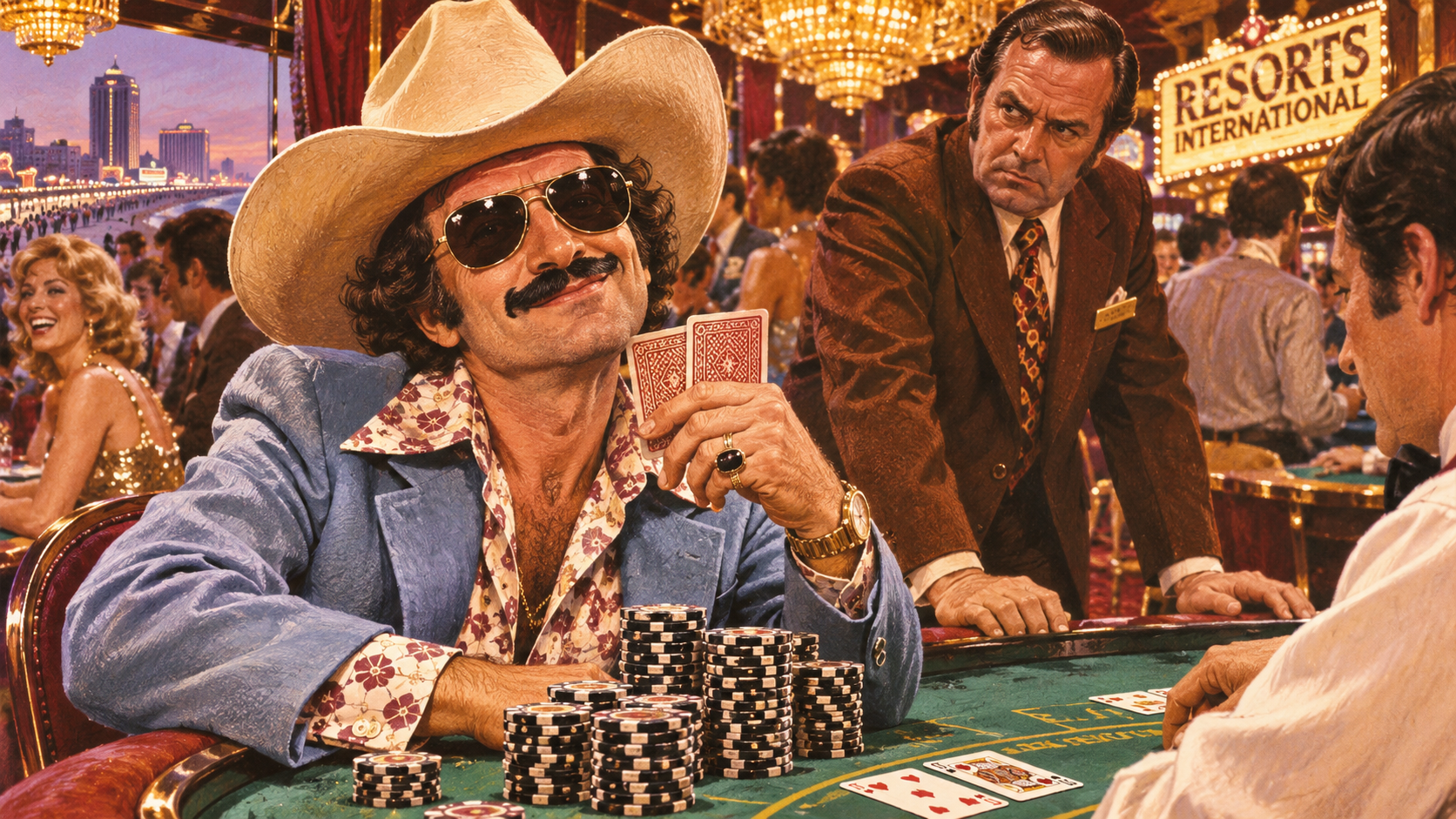
Picture Atlantic City in 1979. Disco is blasting, the Boardwalk is electric, and Resorts International, Atlantic City's first casino, is printing money so fast they practically need snow shovels to clear the cash.
Then a guy in a ten-gallon cowboy hat, dark sunglasses, and a crooked fake mustache strolls up to a blackjack table. He looks like a clueless tourist ready to blow his paycheck. In reality, he’s Ken Uston, a Yale-educated former Pacific Stock Exchange vice president who had already made a fortune beating casinos at their own game. And he wasn't alone.
The Real-Life Ocean’s Eleven
Long before the MIT Blackjack Team became a household name, Ken Uston was helping turn team-based card counting into a highly organized casino operation.
He didn't cheat. He didn't mark cards or bribe dealers. Instead, he recruited teams of ordinary-looking players who could blend into a casino crowd. They sat at different blackjack tables, counted cards in their heads, and used discreet signals to alert a teammate when the remaining cards favored the player.
That was Uston’s cue. Disguised as a sloppy drunk, a biker, or a high-rolling oil tycoon, he could swoop in, drop massive stacks of black chips on the felt, and start betting big while the odds were in his favor. To anyone watching, he looked like another reckless gambler having a lucky night. The casino had no idea how much preparation went into those bets.
"You’re Too Smart to Play Here"
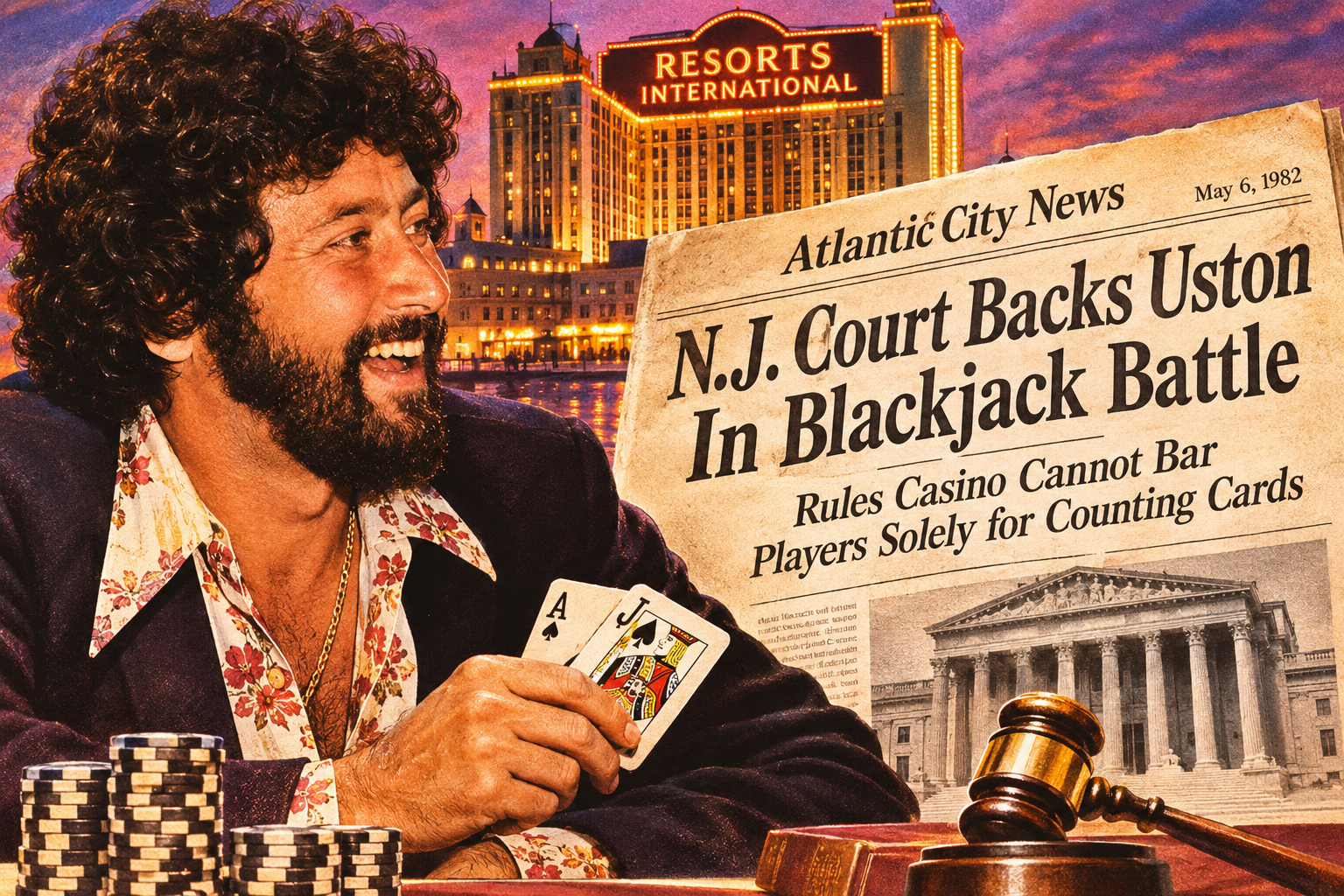
Eventually, the disguises stopped working. Resorts International figured out who Uston was and barred him from playing blackjack.
In Las Vegas, casinos have broad authority to exclude players, including suspected card counters. But Uston decided to pick a fight in New Jersey. He challenged the casino's decision, arguing that using your brain to play a game better than the average customer wasn't grounds for being thrown out.
In 1982, the New Jersey Supreme Court delivered a landmark ruling that stunned the gambling world. Under New Jersey's casino regulatory framework, Atlantic City casinos could not simply exclude someone from blackjack because they were counting cards. The authority to establish rules governing the game belonged to the state's casino regulators.
It was a remarkable victory for Uston, but it didn't mean casinos had to sit helplessly while skilled players took their money.
Why You Still Feel It on the Felt Today
If you play blackjack at Borgata, Hard Rock, or Ocean today, you're still living with the legacy of Ken Uston's courtroom battle, whether you count cards or just follow basic strategy with a complimentary drink in hand.
Atlantic City casinos have developed ways to protect themselves against advantage players without relying on the same kind of outright exclusion that sparked Uston's lawsuit.
The "Panic Shuffle." Ever notice a dealer shuffle the cards unusually early, leaving plenty of cards undealt? Casinos can use early shuffling and other procedures to make card counting less effective. The fewer cards a counter gets to observe before a shuffle, the harder it becomes to exploit an advantage.
The Robot Dealers. Continuous Shuffling Machines, those black boxes that constantly recycle cards into play, are another obstacle for traditional card counters. They make it much harder to track the changing composition of a shoe. You'll find them at some Atlantic City blackjack tables, although traditional shoe games remain available.
The Good News for You. Atlantic City still offers plenty of blackjack tables paying the traditional 3:2 on a natural blackjack. That's worth looking for, especially when compared with the less favorable 6:5 games found in many casinos, including on the Las Vegas Strip. A $25 blackjack pays $37.50 at a 3:2 table, compared with just $30 at 6:5. That's $7.50 less for the exact same winning hand.
Of course, not every Atlantic City table offers 3:2, and payout rules aren't the only thing that matters. Always check the table signage before sitting down.
Ken Uston didn't eliminate the house edge, and his victory didn't stop casinos from fighting back. What he accomplished was something more unusual. He forced the gambling industry to confront a question that still matters today: Should a casino be allowed to refuse your action simply because you've learned how to play its game too well?
Next time you're sitting at an Atlantic City blackjack table and the dealer shuffles earlier than you expected, think about the man in the fake mustache. He didn't just beat casinos at blackjack. He took one to the New Jersey Supreme Court and helped change the rules of the game.
And that's a pretty good story to tell over a drink on the Boardwalk.